The problem
Institutional buyers need a documented, HSE-disciplined source for agronomy advisory.
Our approach
Agronomy Advisory
Agronomy Advisory delivered to institutional standard — structured procurement, chain-of-custody discipline, documented handover.
The Challenge
Smallholder and mid-scale crop production across Ghana and Togo generates significant volume — yet that volume rarely reaches institutional buyers in a form they can accept. The gap is not yield. It is discipline: the structured field-level protocols, post-harvest handling standards, and chain-of-custody documentation that international food processors, export certification bodies, and development procurement programmes require before they will issue a purchase order.
Agronomy advisory in this corridor has historically been delivered informally — seasonal extension visits, input recommendations without follow-through, and field assessments that produce reports no buyer’s compliance team can act on. The result is a structural disconnect: growers who could supply, and institutions that need to buy, separated by a documentation and practice gap that informal advisory cannot bridge.
For exporters moving tropical commodities out of Ghana and Togo, and for food processors whose specification sheets demand traceable, consistently graded raw material, that gap carries direct commercial cost. It delays certification timelines, triggers consignment rejections, and erodes the margin buffer that makes export agriculture viable at institutional scale.
The Kronix Agri Solution
Kronix Agri approaches agronomy advisory as a procurement-readiness discipline, not a seasonal extension service. Engagements begin with a structured field diagnostic — assessing current agronomic practice, post-harvest handling infrastructure, and the documentation architecture already in place at farm and aggregation level. From that baseline, a field protocol is designed that aligns directly with the buyer specification or export standard the client is working toward.
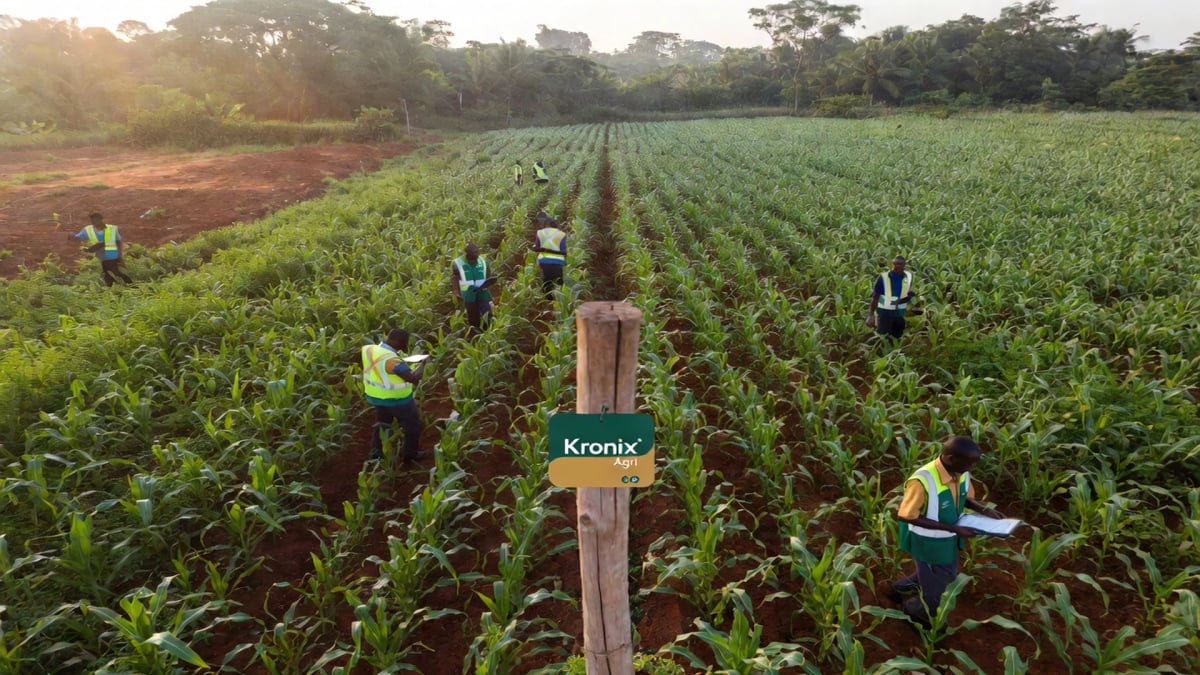
Advisory is delivered through a structured programme of field sessions, documented observation records, and handover protocols at every stage of the crop cycle — from land preparation through harvest management to first-aggregation intake. Each handover produces a documented record that travels with the commodity, building the chain-of-custody file that institutional buyers and certification assessors require.
The working method is specification-first: every agronomic recommendation is anchored to the end-buyer’s requirements or the export-readiness threshold the client has committed to. Kronix Agri advisors coordinate directly with the aggregation and logistics functions to ensure field-level decisions translate without break to the export-readiness processing stage — keeping the commodity, and its documentation, intact across the full value chain.
Programme Specification
- Structured field diagnostic with documented baseline assessment across agronomic practice, infrastructure, and existing record-keeping
- Crop-cycle protocol design aligned to buyer specifications, export certification frameworks, or institutional procurement requirements
- Documented field observation records at each programme stage — planting, canopy management, harvest readiness, and first-intake
- Chain-of-custody handover documentation designed for institutional buyer compliance review and export certification audit
- Coordination with aggregation intake teams to ensure agronomic standards are verified at point of reception, not assumed
- Advisory scoped to tropical commodities across the Ghana and Togo production corridor
Typical Engagement Profile
Agronomy advisory engagements are structured across a full crop cycle or defined programme period, working with outgrower groups, mid-scale farm operations, or aggregation-anchored cooperatives that are preparing for institutional supply relationships. Sectors served include commodity export (fresh and processed tropical produce), food processing raw material procurement, and structured development programme supply chains operating under external quality frameworks. Engagement scope is calibrated at the diagnostic stage and confirmed before programme delivery begins — ensuring advisory depth matches the compliance threshold the client must reach.
Outcomes
- Farm and aggregation operations arrive at institutional buyer qualification stages with a complete, auditable chain-of-custody record rather than a gap-filled compliance file
- Agronomic practice at field level is documented and verifiable — reducing consignment rejection risk at export inspection and buyer intake
- Growers and outgrower groups develop durable field protocols that can be applied consistently across subsequent crop cycles, not just the advisory period
- Clients carrying development programme mandates have field-level evidence documentation that satisfies programme reporting and procurement verification requirements
- The advisory engagement produces a programme record that serves simultaneously as an operational guide, a compliance file, and a supply-relationship credential for the institutional buyer review stage