The problem
Institutional buyers need a documented, HSE-disciplined source for crop aggregation & sourcing.
Our approach
Crop Aggregation & Sourcing
Crop Aggregation & Sourcing delivered to institutional standard — structured procurement, chain-of-custody discipline, documented handover.
The Challenge
Institutional buyers, export-licensed processors and development procurement offices operating across Ghana and Togo face a structural problem that is rarely visible from the demand side: the aggregation layer between smallholder production and commercial-scale delivery is fragmented, undocumented and inconsistently managed. Crop volumes shift with rainfall cycles, post-harvest handling varies by district, and the absence of traceable chain-of-custody records makes compliance with buyer specifications — let alone international phytosanitary expectations — difficult to assure at the point of handover.
Food processors require consistent moisture levels, defined sorting grades and repeatable delivery schedules. Export-ready volumes demand documentation that traces origin, handling conditions and any intermediary touchpoints. Development programme procurement offices require procurement records that satisfy audit. None of these requirements can be met by informal aggregation networks operating without systematic oversight, documented protocols or quality-controlled intake processes.
The sector’s credibility gap is not a production problem — Ghana and Togo’s tropical crop output is substantial and diverse. It is a discipline problem: the structured procurement infrastructure that transforms raw farm-gate supply into specification-aligned, buyer-ready product has historically been under-built. That gap is the space Kronix Agri was constituted to occupy.
The Kronix Agri Solution
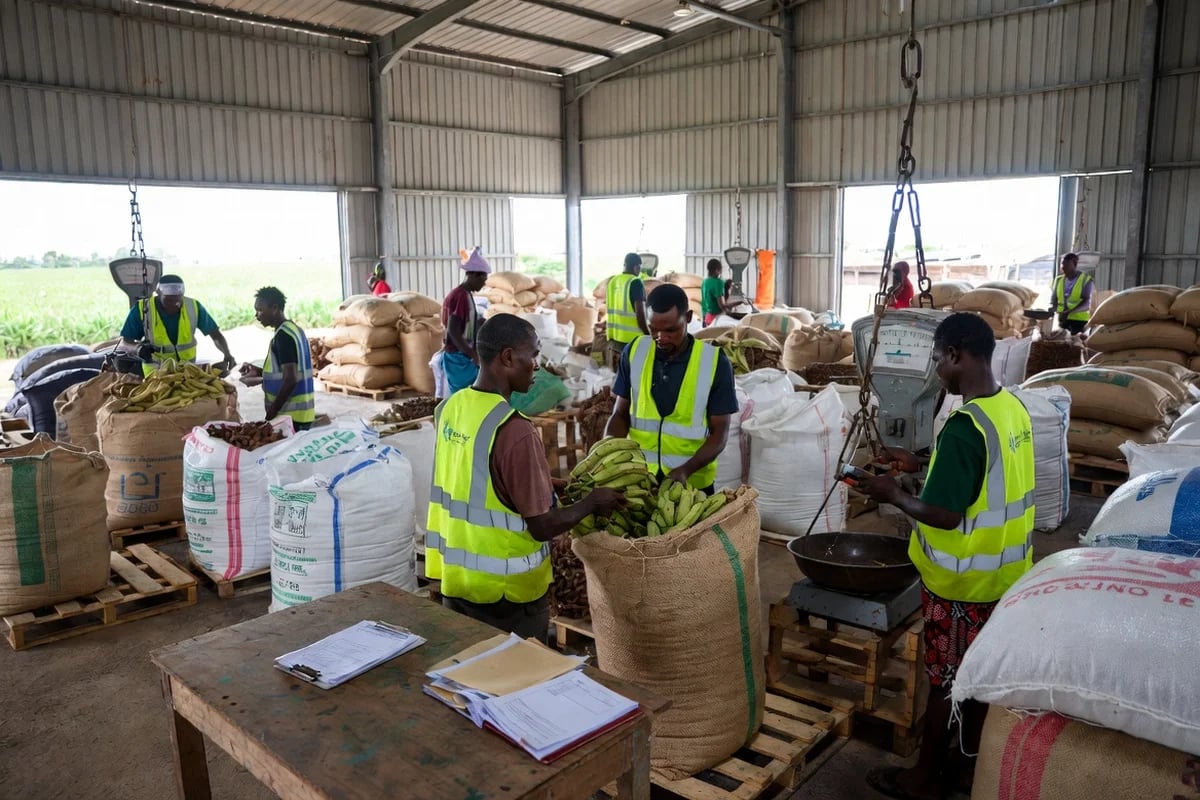
Kronix Agri’s crop aggregation and sourcing capability is built around a documented procurement discipline — one where every intake, sorting stage, moisture and grade assessment, and outbound handover is recorded against a defined specification brief issued at the outset of each client engagement. The process begins with a sourcing brief aligned to the client’s end-use requirements: target crop variety, volume range, grade parameters, packaging format, documentation requirements and delivery schedule. That brief governs every downstream decision.
Aggregation is conducted through managed networks across active production zones in Ghana and Togo, with intake protocols enforced at registered collection points. Crop batches are assessed on receipt, non-conforming volumes are quarantined rather than blended, and traceability documentation accompanies each consignment from collection point to the client’s designated delivery location. The chain-of-custody record is not a retrospective summary — it is a live document built at each handover stage.
For institutional buyers with audit obligations — whether commercial, regulatory or donor-programme driven — Kronix Agri’s documentation architecture provides the procurement trail that independent review requires.
Procurement + Process Specification
- Structured sourcing brief issued per engagement, defining crop type, grade parameters, volume range and documentation standard
- Multi-zone aggregation coverage across active production regions in Ghana and Togo
- Documented intake assessment at designated collection points — moisture, grade, physical condition recorded per batch
- Chain-of-custody records maintained continuously from intake through to client delivery handover
- Non-conforming volume quarantine protocol — no under-grade blending into compliant consignments
- Outbound handover documentation issued with each delivery, formatted to buyer or programme audit requirements
Typical Engagement Profile
A representative engagement involves an export-licensed food processor or institutional procurement office with a defined seasonal requirement for one or more tropical crop categories — cassava, maize, soya, shea, or allied commodities — across Ghana or Togo. The procurement brief is formalised prior to the season, aggregation networks are activated across the relevant production zones, and delivery is structured in scheduled tranches aligned to the client’s processing or export dispatch calendar. Engagements typically span a defined crop season with options for rolling re-engagement where the procurement brief remains in force.
Outcomes
- Consistent crop volumes delivered to a pre-agreed grade and documentation standard, reducing intake rejection and processing downtime
- Chain-of-custody documentation that satisfies buyer compliance, audit trail and export-clearance requirements
- Elimination of informal aggregation risk — undocumented volumes, inconsistent grading and unverifiable origin records
- A traceable procurement record that supports institutional reporting, donor programme compliance and regulatory review
- A structured sourcing relationship that can be calibrated and re-engaged across successive seasons without rebuilding the procurement framework from the ground up