The problem
Institutional buyers need a documented, HSE-disciplined source for packaging & traceability.
Our approach
Packaging & Traceability
Packaging & Traceability delivered to institutional standard — structured procurement, chain-of-custody discipline, documented handover.
The Challenge
Exporters, food processors and institutional buyers sourcing tropical commodities across Ghana and Togo face a persistent structural problem: produce that meets agronomic standards at the farm gate routinely fails to meet buyer specifications by the time it reaches a container loading bay or processing intake. The gap is not quality — it is documentation and packaging discipline. Without a chain-of-custody protocol governing every handover, a consignment that began well arrives with ambiguity baked into every layer.
Development programmes and multinational food procurement desks have grown increasingly uncompromising on traceability. Origin declarations, lot segregation, moisture attestations, pest-risk documentation — these are now baseline requirements, not premium additions. Smaller aggregators and informal brokers cannot consistently deliver them. The result is delayed shipments, contested invoices, and the quiet erosion of relationships that took years to build.
The compounding challenge is packaging itself. Commodity packaging that is not calibrated to the specific stress profile of the export corridor — humidity, handling pressure, stacking loads across road and sea legs — generates avoidable claims and reputational cost. Institutional buyers do not renegotiate; they relist their approved suppliers.
The Kronix Agri Solution
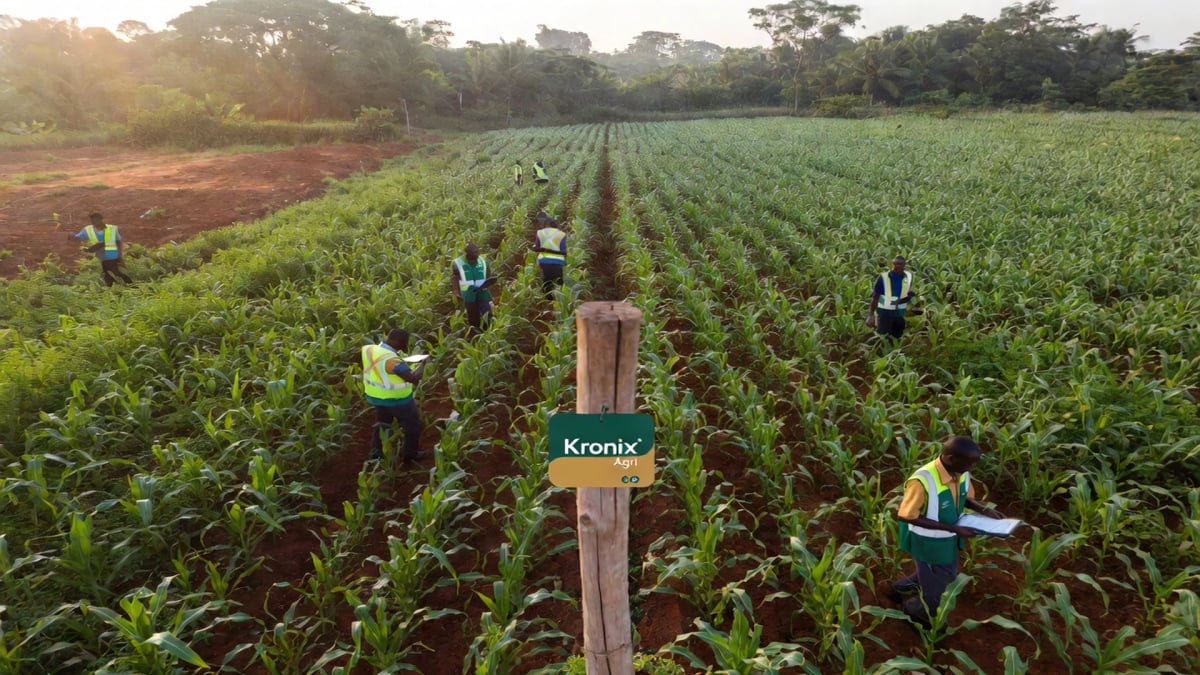
Kronix Agri approaches packaging and traceability as a single integrated discipline rather than two separate operational functions. Every consignment processed through our facility is enrolled in a documented lot-management protocol from intake through final handover. Lot identity, origin cluster, moisture reading, grade classification, and inspection status are recorded at each stage — creating a traceable thread that survives the full export journey.
Our packaging selection is matched to the commodity, the destination channel, and the buyer’s specification sheet. We do not apply a single-format solution across diverse crop lines. Cocoa, cashew, shea, dried chillies, and similar tropical commodities each carry distinct moisture dynamics, stacking requirements, and phytosanitary exposure risks. Material selection, fill weight, sealing method, and labelling convention are all calibrated accordingly.
The signature discipline at Kronix Agri is handover documentation. Every physical transfer — from field cluster to aggregation point, aggregation point to processing, processing to container — is recorded and counter-signed. Institutional buyers receive a consolidated traceability file with the consignment, not a summary produced after the fact. The record exists because the process produced it.
Material and System Specification
- Lot segregation protocol — each intake batch assigned a unique lot reference maintained through all processing and packaging stages
- Commodity-matched packaging formats — jute, woven polypropylene, or multi-wall kraft selected against crop type, moisture class, and buyer specification
- Sealed and labelled to export convention — weight, origin, grade, and lot reference printed to buyer and phytosanitary authority requirements
- Moisture and quality attestation records — instrument readings logged at intake, post-drying (where applicable), and pre-pack
- Chain-of-custody documentation — signed handover records at every internal transfer point and at final dispatch
- Consolidated traceability file — delivered with the physical consignment for institutional buyer intake teams
Typical Project Profile
A representative engagement involves a mid-to-large seasonal commodity consignment — cashew, dried pepper, or shea product — sourced across multiple farm clusters in Ghana or Togo, requiring consolidation, grading, packaging to a named buyer specification, and full documentation for export clearance. Timelines are governed by the crop calendar and buyer intake windows, with Kronix Agri coordinating aggregation scheduling, processing throughput, and documentation closure to align with vessel or air-freight deadlines. Institutional food processors, export trading houses, and development programme procurement teams are the primary client profiles for this service.
Outcomes
- Consignments arrive at buyer intake with complete, legible traceability documentation — reducing dispute risk and clearance delays
- Packaging integrity is maintained across the full road and sea corridor, supporting claim-free delivery
- Lot-level traceability enables buyers to meet their own downstream compliance and origin-labelling obligations
- Institutional procurement relationships are sustained on the strength of documented, repeatable process rather than relationship goodwill alone
- Export-readiness is built into the aggregation workflow — not retrofitted at the loading bay