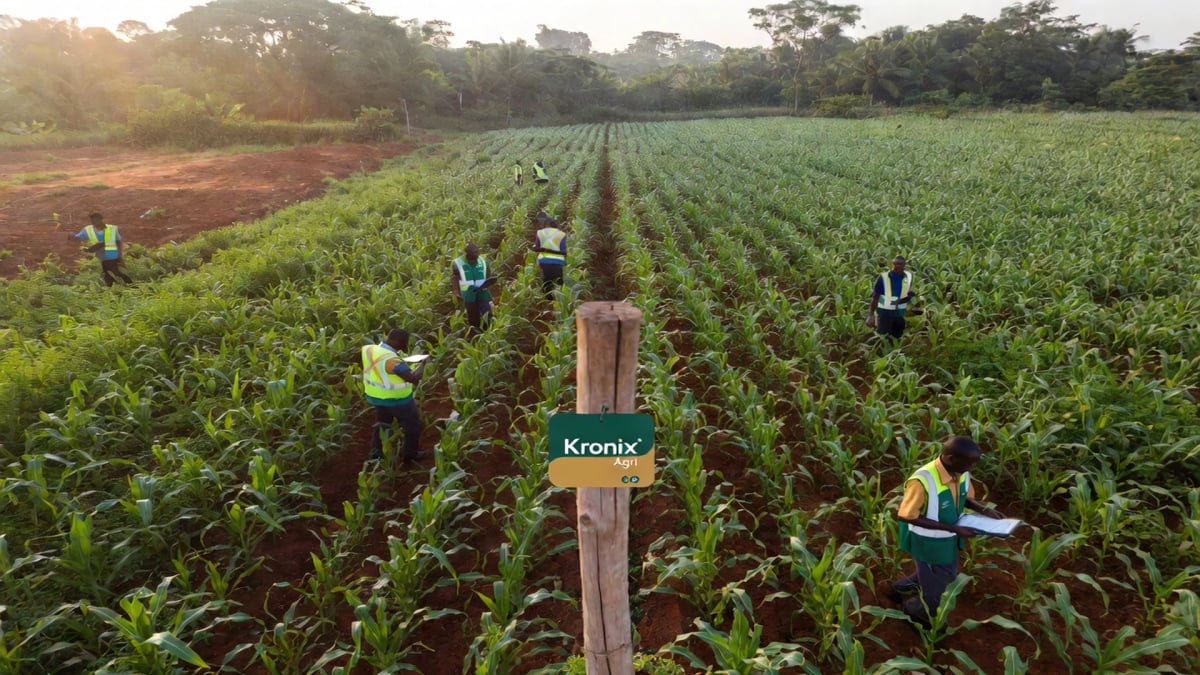
Commodity Trade Facilitation
Structured facilitation of agricultural commodity trade for institutional buyers and exporters, with transparent commercial process, documentation and coordination across Ghana and Togo supply corridors.
How Commodity Trade Facilitation Works
Moving a specification-grade tropical commodity from a West African origin to an institutional buyer is a coordination problem — commercial terms, grading, phytosanitary documentation and logistics — and to be clear before anything else: Kronix Agri is a trade-facilitation and aggregation partner, not a plantation. We structure the commercial process so buyers acquire with confidence and suppliers fulfil to documented specification, across the Ghana and Togo corridors, since 1985. Discuss a sourcing partnership — or request a proposal: +233 20 531 3333 (Togo / Francophone: +228 96 86 86 75).
What is Commodity Trade Facilitation?
Commodity trade facilitation is the structured coordination of all commercial, logistical and documentary processes that allow agricultural commodities to move efficiently from origin to institutional buyer. In the context of Ghana and Togo supply corridors, this means aligning aggregation schedules, phytosanitary documentation, quality grading, commercial terms and transport sequencing into a single managed process — so that no handover is undocumented and no shipment advances without verified status.
Exporters, food processors, development programme procurement desks and institutional commodity buyers specify this service when the complexity of origin-to-destination coordination exceeds what internal procurement teams can reliably absorb. Kronix Agri structures the commercial process so that buyers acquire with confidence and suppliers fulfil to documented specification.
When to Specify Commodity Trade Facilitation
This service is most precisely suited to institutional buyers entering or scaling within the West African tropical crop market — those sourcing cocoa, cashew, shea, dried ginger, sesame, soya, groundnut or other specification-grade commodities through Ghana or Togo corridors. Food processors requiring consistent crop quality across sequential consignments, and development programme procurement desks managing smallholder linkage supply chains, benefit most directly.
Exporters who need to present clean documentation packages to destination-market regulators, and international trading desks managing volume coordination across multiple aggregation zones, also specify this service as a discipline layer — ensuring that commercial process integrity holds from the first field-level aggregation point through to final handover.
Methodology — The Kronix Agri Specialist Approach
-
Commercial Brief and Corridor Scoping — The engagement opens with a structured commercial brief: commodity type, volume intent, quality parameters, delivery timeline and destination documentation requirements. Kronix Agri maps the appropriate Ghana or Togo supply corridor against this brief before any aggregation commitment is made.
-
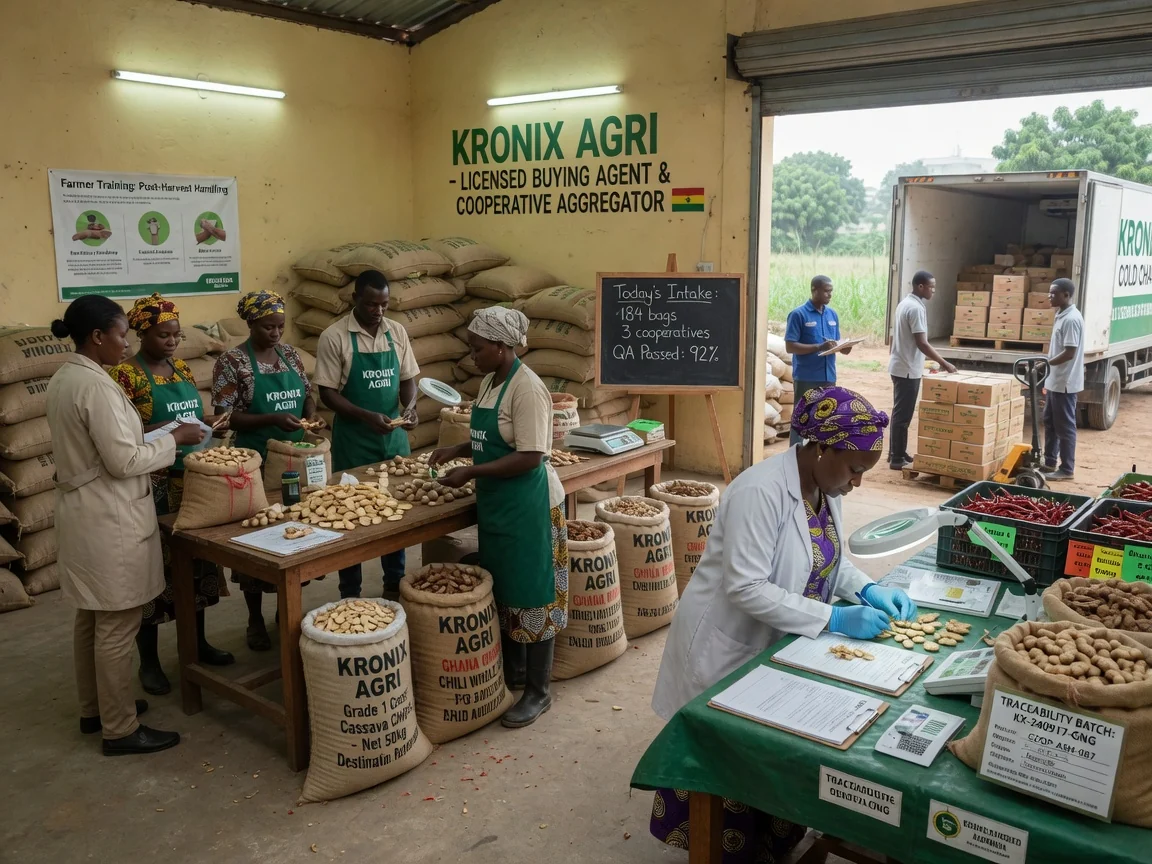
Supplier and Aggregation Network Engagement — Verified aggregation partners and licensed buying agents within the relevant corridor are engaged against the defined specification. No supply node enters the process without documented traceability credentials and prior quality performance on record.
-
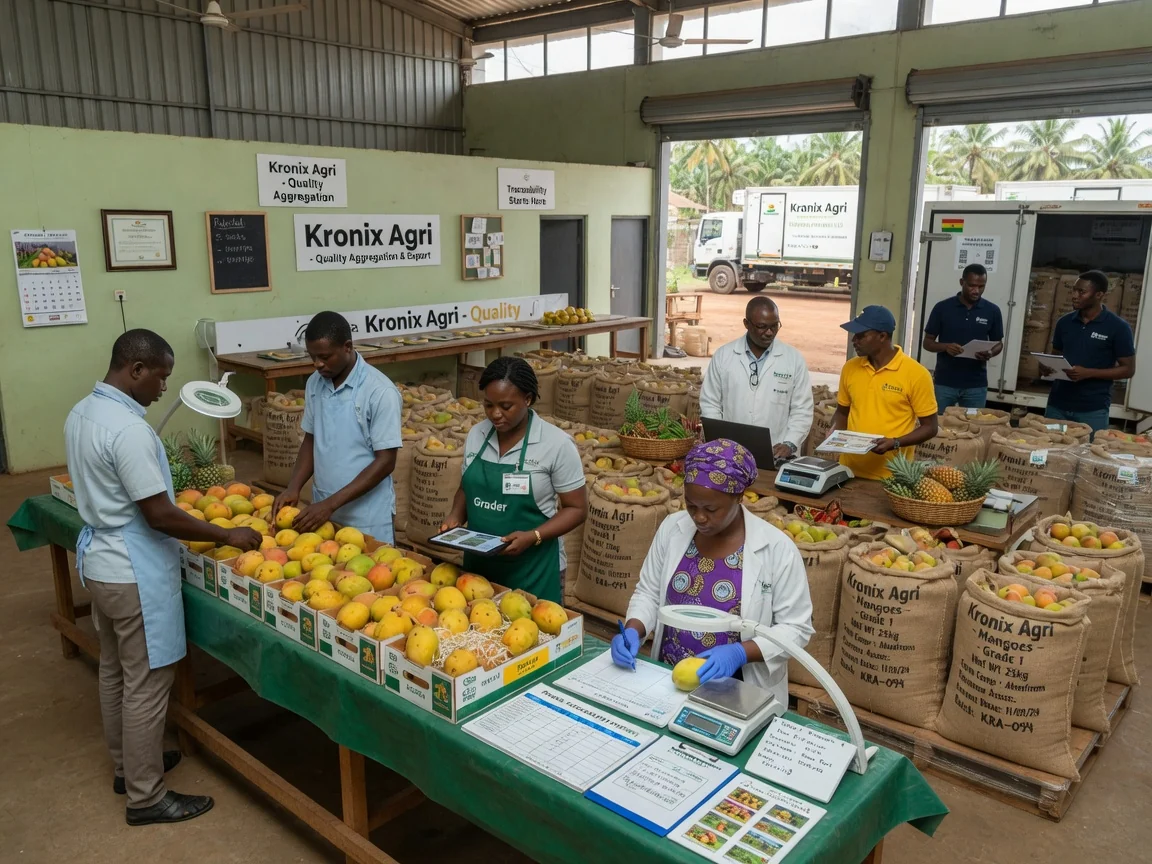
Grading, Sorting and Export-Readiness Processing — Commodity consignments are assessed at aggregation point and, where required, directed through grading and processing to bring them to the buyer’s declared export-readiness standard. Every stage is logged against the original commercial brief.
-
Documentation Assembly and Compliance Coordination — Phytosanitary certificates, certificates of origin, quality inspection reports, weight and moisture records, and any buyer-specified additional documentation are assembled in parallel with physical preparation — so the documentation package is complete at handover, not assembled in arrears.
-
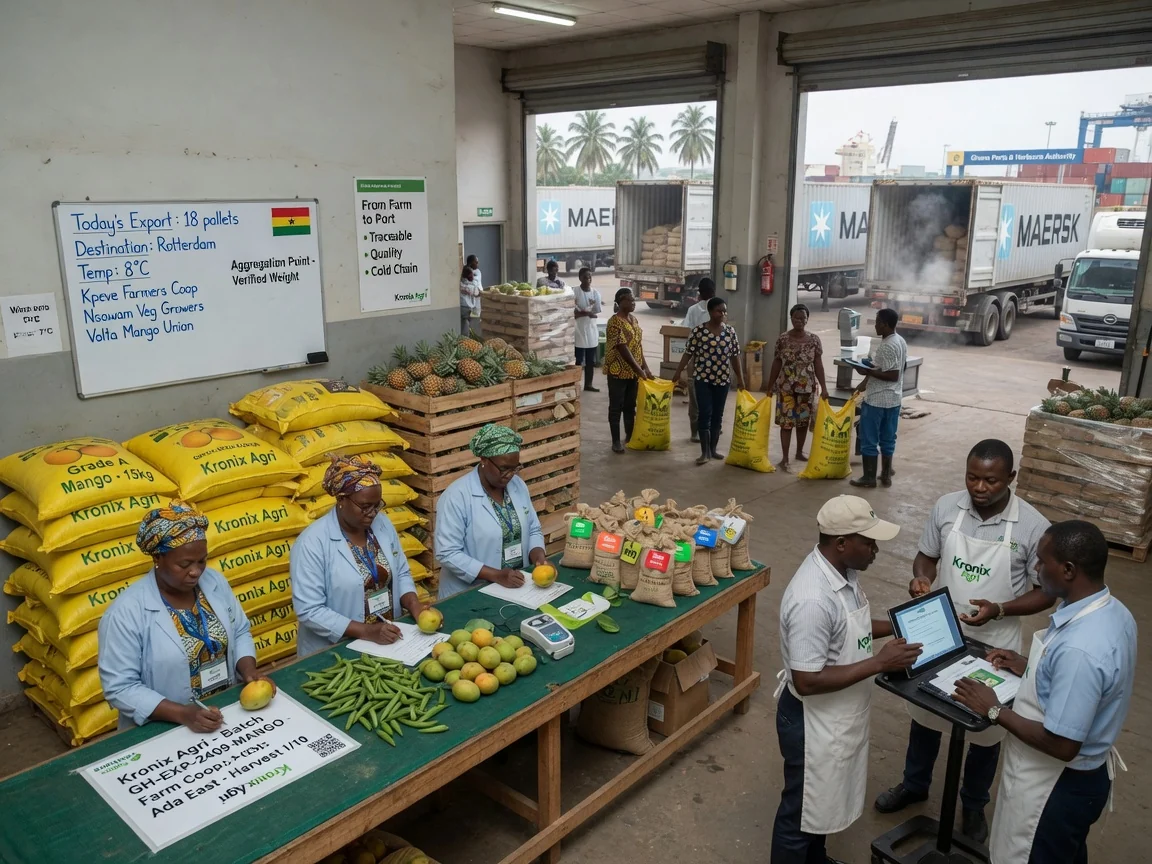
Logistics Coordination and Handover Confirmation — Transport sequencing from aggregation point to port or inland delivery node is coordinated to match vessel or destination-facility schedules. Handover is confirmed in writing with a full documentation record transferred to the buyer or their freight forwarder.
Supply Standards and Process Disciplines
- Traceability documentation maintained at every aggregation handover point
- Commodity grading against buyer-declared or destination-market quality parameters
- Phytosanitary and certificate of origin compliance coordinated in full for Ghana and Togo corridors
- Commercial term structuring aligned to institutional buyer procurement protocols
- Weight, moisture and quality records held for each consignment and made available to buyer
- Chain-of-custody integrity maintained from field aggregation through to final logistics handover
Outcomes and Commercial Confidence
Buyers who procure through a structured facilitation process receive more than commodity — they receive a documented supply event that withstands regulatory scrutiny, reduces destination-market risk and creates an auditable procurement record. Kronix Agri’s facilitation discipline means that institutional procurement desks can report against their own compliance requirements with the documentation to support every line.
For repeat programme buyers, the process yields a progressively sharper corridor relationship — aggregation networks calibrated to specification, lead times tightened through familiarity, and documentation turnaround that matches institutional procurement calendars.
Compliant & To Standard
- We work within the relevant Ghanaian regulatory regime for each commodity — the Tree Crops Development Authority (TCDA) for crops such as cashew, shea and rubber, COCOBOD’s licensed regime for cocoa, and PPRSD phytosanitary requirements for export — and describe our role and certifications honestly, never a licence we do not hold
- Documentation and export-readiness coordinated toward standards such as GLOBALG.A.P / HACCP / Ghana Standards Authority where they apply, with honest status (held vs in progress)
- Established 1985 — a real trade-facilitation and aggregation partner, serving exporters, processors, institutional buyers and development programmes across Ghana, Africa and the Lomé corridor — not a plantation
Related Services
Clients sourcing through commodity trade facilitation commonly draw on complementary Kronix Agri services:
- Crop Aggregation & Sourcing — field-level and hub aggregation across Ghana and Togo
- Export-Readiness & Certification Support — grading, documentation and pre-shipment preparation
- Agro-Logistics & Distribution — transport sequencing and inland logistics management
- Quality Assurance & Grading — to the buyer’s declared standard
- Packaging & Traceability — documented, audit-ready consignments