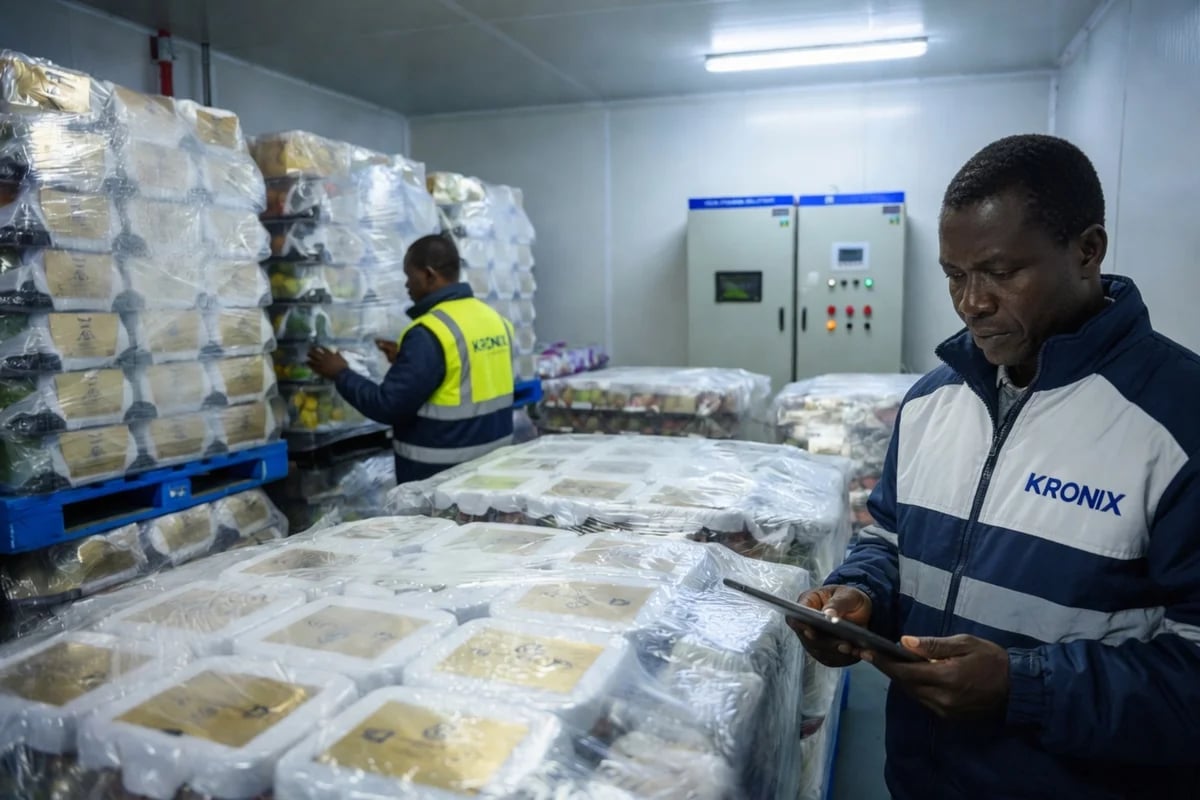
Post-Harvest Handling & Cold Chain
Post-harvest handling, storage and cold-chain coordination for perishable and semi-perishable commodities, structured to preserve quality and export-readiness from collection through to cargo-ready stage.
Getting a perishable Ghanaian crop to an export buyer without losing its grade is a post-harvest and cold chain problem — a crop begins to deteriorate the moment it leaves the field, and quality holds only when temperature, humidity, handling, and transit time are governed by documented procedure at every stage. To be clear before anything else: Kronix Agri is an aggregation and export-facilitation partner, not a plantation. We structure and coordinate this discipline from farm gate to cargo-ready stage, since 1985. Discuss a sourcing partnership — or request a proposal: +233 20 531 3333 (Togo / Francophone: +228 96 86 86 75).
What Is Post-Harvest Handling & Cold Chain?
Post-harvest handling encompasses every structured intervention applied to a commodity from the moment it leaves the field — sorting, grading, pre-cooling, controlled-atmosphere holding, packaging-for-export, and managed movement through temperature-sensitive logistics corridors. Cold chain coordination extends that discipline across the full journey: cold rooms, reefer vehicles, staging facilities, and documented handover points that maintain the integrity of perishable and semi-perishable crops until they reach a cargo-ready state.
Institutional buyers, food processors, export licensees, and development programmes specify this discipline because commodity quality does not hold by accident. It degrades systematically from the point of harvest unless temperature, humidity, handling pressure, and transit time are governed by documented procedure at every stage. Kronix Agri structures this service for clients operating across Ghana and Togo who require traceability-disciplined, specification-grade post-harvest management aligned to the standards export markets demand.
When to Specify Post-Harvest Handling & Cold Chain
This service is appropriate wherever perishable or semi-perishable commodities — fresh fruits, vegetables, roots, tubers, or processed intermediates — are moving from aggregation to an export vessel, processing intake, or institutional distribution point. Exporters working against firm vessel booking windows, food processors managing raw material intake quality, and development programmes procuring from smallholder networks all encounter the same structural risk: post-harvest losses that compress margin and jeopardise supply reliability.
Cold chain specification is equally critical for clients who aggregate across multiple districts in Ghana or Togo before consolidating at a single port or border crossing. Extended transit distances, high ambient temperatures, and variable road infrastructure make structured cold chain intervention — rather than passive cooling — the only reliable method of delivering commodities at consistent quality grades.
Methodology — The Kronix Agri Specialist Approach
-
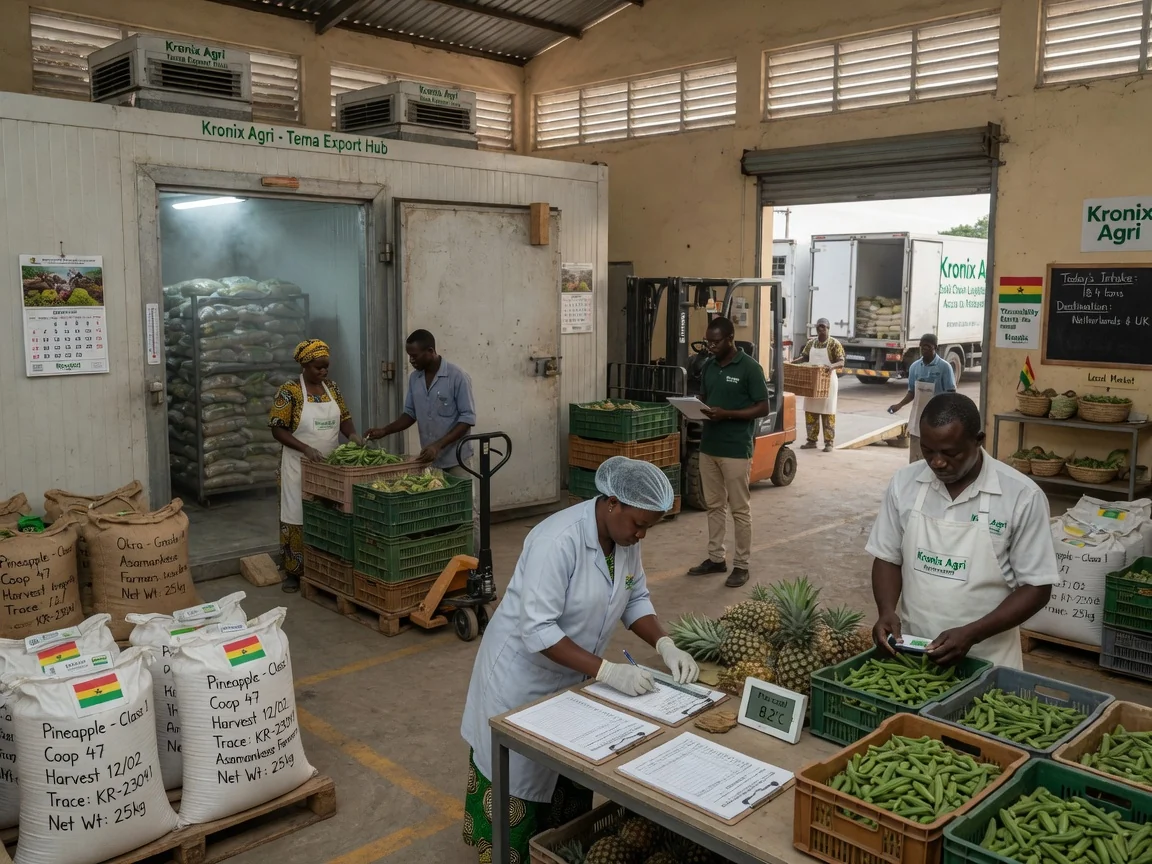
Commodity intake assessment. At point of collection or aggregation, each batch is assessed for field temperature, visual grade, moisture condition, and handling damage. Intake documentation is initiated at this stage, establishing the quality baseline against which all subsequent handling is measured.
-
Pre-cooling and controlled holding. Commodities requiring temperature reduction are moved through pre-cooling infrastructure before entering cold room storage. Holding conditions — temperature range, humidity, airflow — are set to the specification of the commodity type and the intended export or processing destination.
-
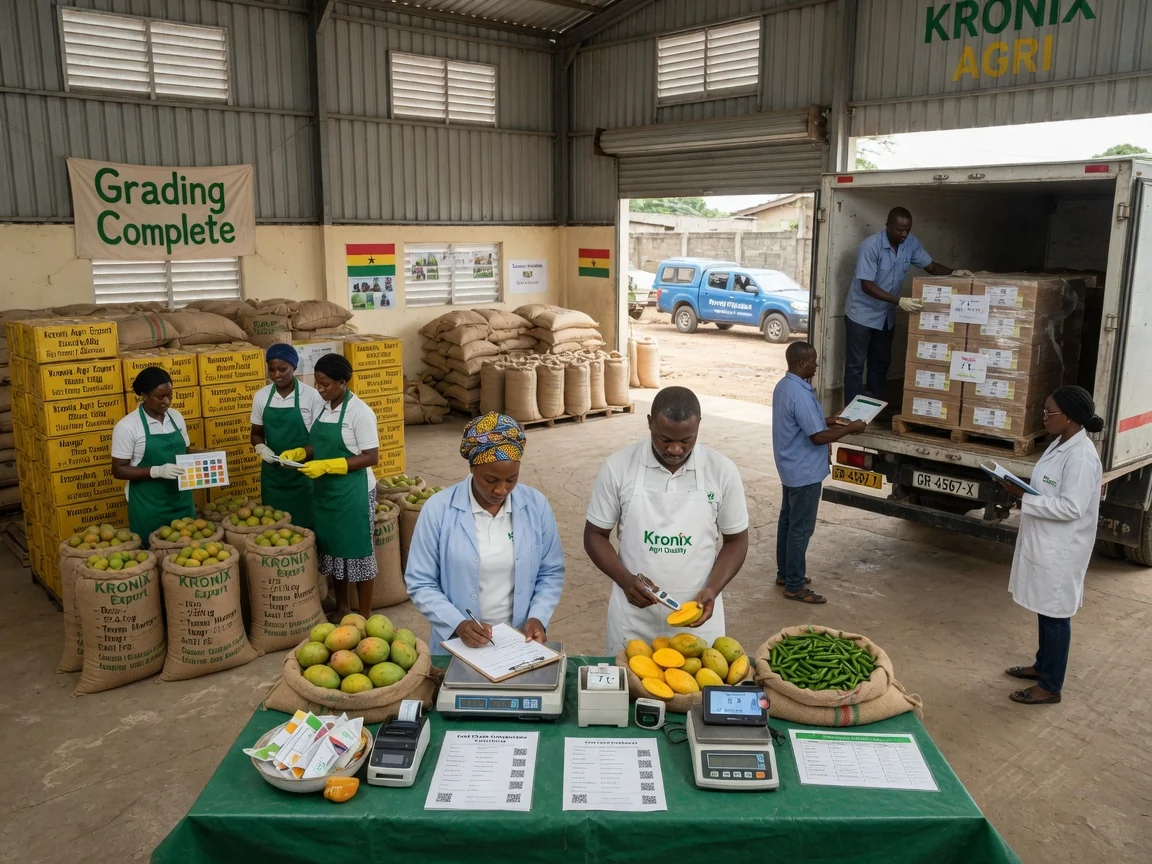
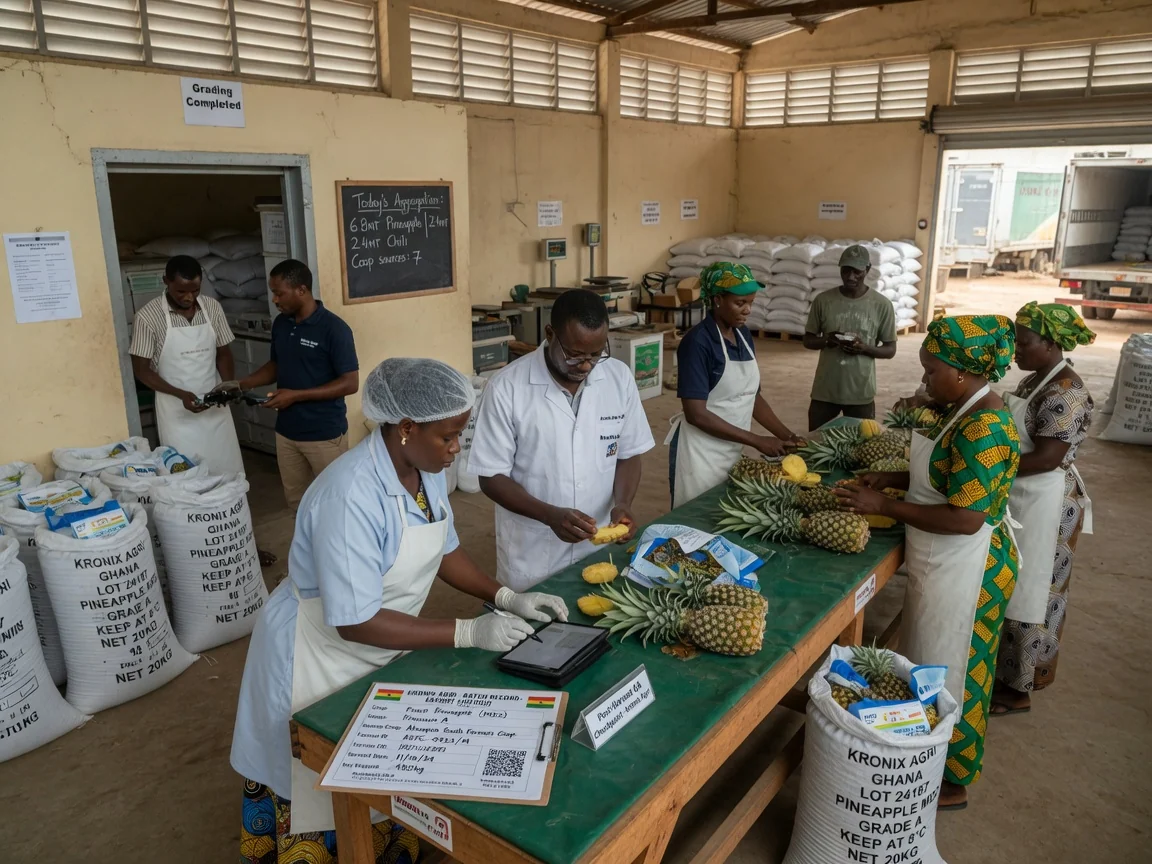
Grading, sorting, and packaging-for-export. Batches are sorted to grade within the holding environment, reducing thermal exposure during processing. Packaging materials and configurations are selected to maintain cold chain integrity through subsequent transport stages.
-
Cold chain movement coordination. Reefer vehicle scheduling, loading procedures, and transit documentation are coordinated to eliminate breaks in the cold chain between storage facility and the cargo-ready handover point — whether port, processing intake, or border crossing in Ghana or Togo.
-
Documented handover and traceability sign-off. Every cold chain movement is closed with a documented handover record: batch identity, temperature log, grade confirmation, and receiving party acknowledgement. This record set forms the traceability spine that institutional buyers and export certifiers audit.
Process Standards & Quality Anchors
- Lot-level intake documentation initiated at point of first aggregation
- Temperature and humidity log maintained continuously through cold room and reefer transit
- Grade-sorting conducted under controlled conditions to minimise thermal break exposure
- Packaging-for-export configured to the commodity’s physiological requirements and destination market specifications
- Handover documentation structured to support export certification, buyer audit, and development programme reporting requirements
- Chain-of-custody records held and retrievable across the full Ghana–Togo operating corridor
Outcomes for Institutional Clients
Clients who specify Kronix Agri’s post-harvest handling and cold chain coordination receive commodities at cargo-ready stage that reflect the quality grade documented at intake — not the degraded condition that unmanaged post-harvest exposure produces. Traceability documentation is complete, auditable, and structured to satisfy the requirements of export licensors, institutional food processors, and development programme procurement officers without additional reconstruction.
Compliant & To Standard
- We work within the relevant Ghanaian regulatory regime for each crop — the Tree Crops Development Authority (TCDA) for crops such as cashew and shea, COCOBOD’s licensed regime for cocoa, and PPRSD phytosanitary requirements for export — and describe our role and certifications honestly, never a licence we do not hold
- Cold chain and handling discipline structured to support readiness toward standards such as GLOBALG.A.P / HACCP / Ghana Standards Authority where they apply, with honest status (held vs in progress)
- Established 1985 — a real crop-aggregation and export-facilitation partner, not a plantation — structuring post-harvest handling for exporters, processors, institutional buyers, and development programmes across the Ghana–Togo corridor
Related Services
- Crop Aggregation & Sourcing — documented field-to-facility sourcing upstream of cold chain
- Quality Assurance & Grading — grade resolved under controlled conditions
- Packaging & Traceability — packaging that holds cold chain integrity
- Export-Readiness & Certification Support — documentation for export
- Agro-Logistics & Distribution — reefer movement to port or border across Ghana and Togo